




The Odyssey Movie Explained: Plot, Characters, Story & Ending

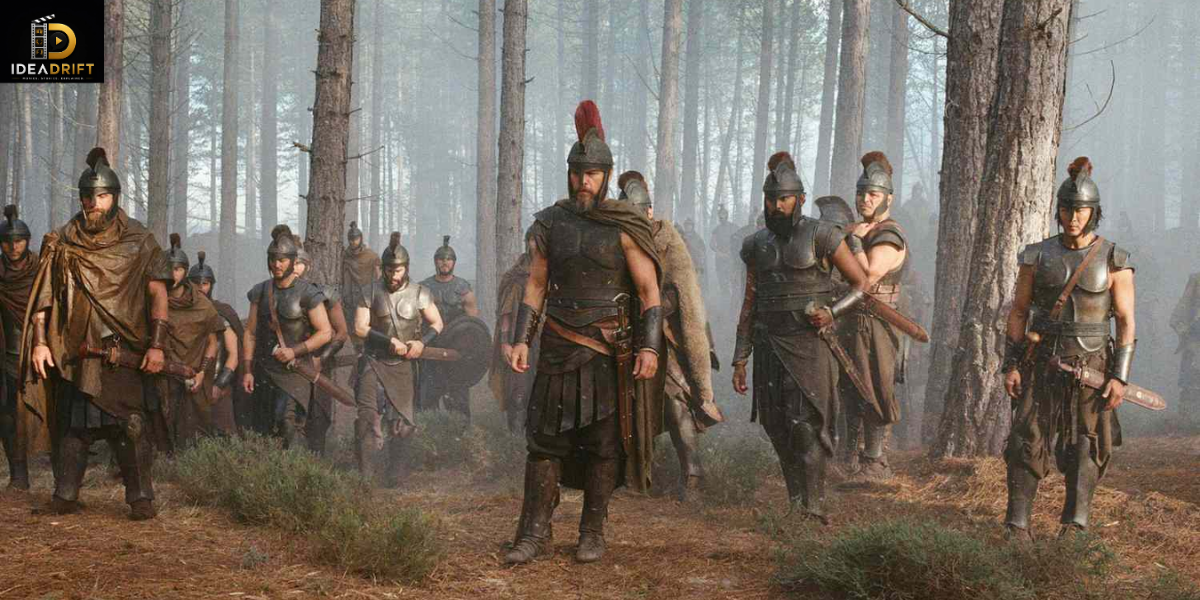
The Odyssey is one of the most famous adventure stories ever told, combining Greek mythology, heroic battles, dangerous creatures, powerful gods, and an emotional journey home. Based on Homer’s ancient epic poem The Odyssey, the story follows Odysseus, the King of Ithaca, as he struggles to return to his wife and son after the Trojan War.
The story has inspired countless books, television shows, films, and other adaptations. Its themes of family, loyalty, courage, temptation, identity, and perseverance have remained relevant for thousands of years.
In this article, we explain The Odyssey movie, including its story, major characters, important events, mythology, themes, and ending.
Table of Contents
What Is The Odyssey Movie About?
At its heart, The Odyssey is the story of a warrior trying to find his way home.
Odysseus has fought for years in the Trojan War. After the war finally ends, he sets sail for Ithaca, where his wife Penelope and son Telemachus are waiting for him.
However, Odysseus’ journey home becomes far more difficult than he expects. His crew encounters strange islands, dangerous monsters, seductive temptations, and angry gods. Instead of reaching Ithaca quickly, Odysseus spends years struggling to survive.
The central conflict becomes a battle between Odysseus’ desire to return home and the forces that continue to prevent him from reaching his family.
The Story of Odysseus
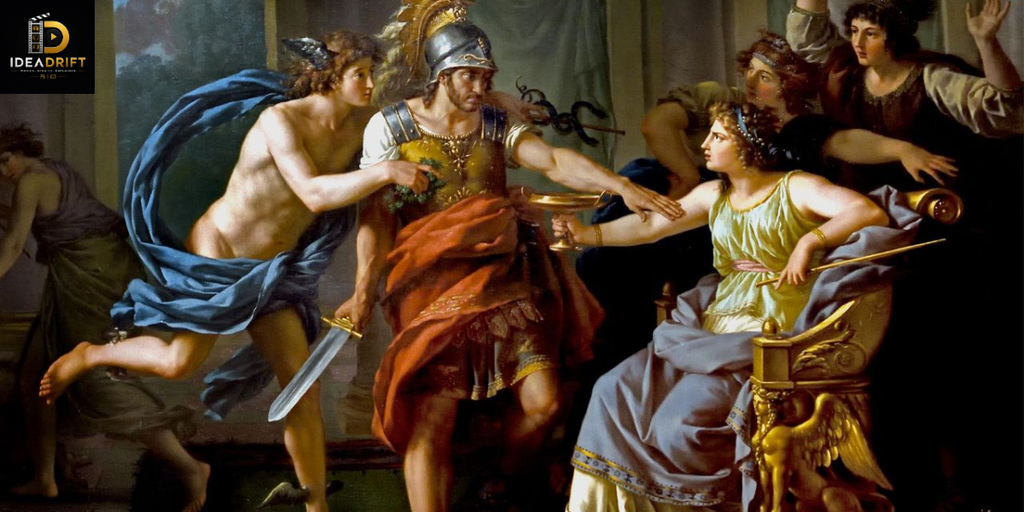
Odysseus is not the strongest warrior in Greek mythology, but he is famous for his intelligence and cleverness. His ability to think strategically often allows him to survive situations that would be impossible through physical strength alone.
After leaving Troy, Odysseus and his men encounter numerous dangers. Every experience teaches him something, but some of his decisions also create new problems.
One of the most important moments occurs when Odysseus encounters the Cyclops Polyphemus.
Odysseus and the Cyclops
The encounter with Polyphemus is one of the most famous parts of The Odyssey.
Odysseus and his men become trapped inside the Cyclops’ cave. Polyphemus is enormous and extremely dangerous, and escaping through force seems almost impossible.
Instead, Odysseus uses his intelligence.
He tells the Cyclops that his name is “Nobody.” Odysseus eventually blinds Polyphemus and escapes with his men by hiding underneath the Cyclops’ sheep.
The plan works, but Odysseus makes a serious mistake afterward. Instead of remaining anonymous, he proudly reveals his real identity.
Polyphemus is the son of Poseidon, the god of the sea. When Polyphemus asks his father for revenge, Poseidon becomes Odysseus’ enemy.
This decision makes Odysseus’ journey home even more difficult.
Poseidon vs. Odysseus
Poseidon becomes one of the greatest obstacles in Odysseus’ journey.
As the god of the sea, Poseidon has enormous power over the waters Odysseus must cross. Storms, shipwrecks, and other dangers repeatedly threaten the hero.
The conflict between Poseidon and Odysseus also represents an important idea in the story: human intelligence has limits.
Odysseus can outsmart monsters and enemies, but he cannot simply defeat a god. His journey therefore becomes a struggle between human determination and forces beyond human control.
Athena and Odysseus
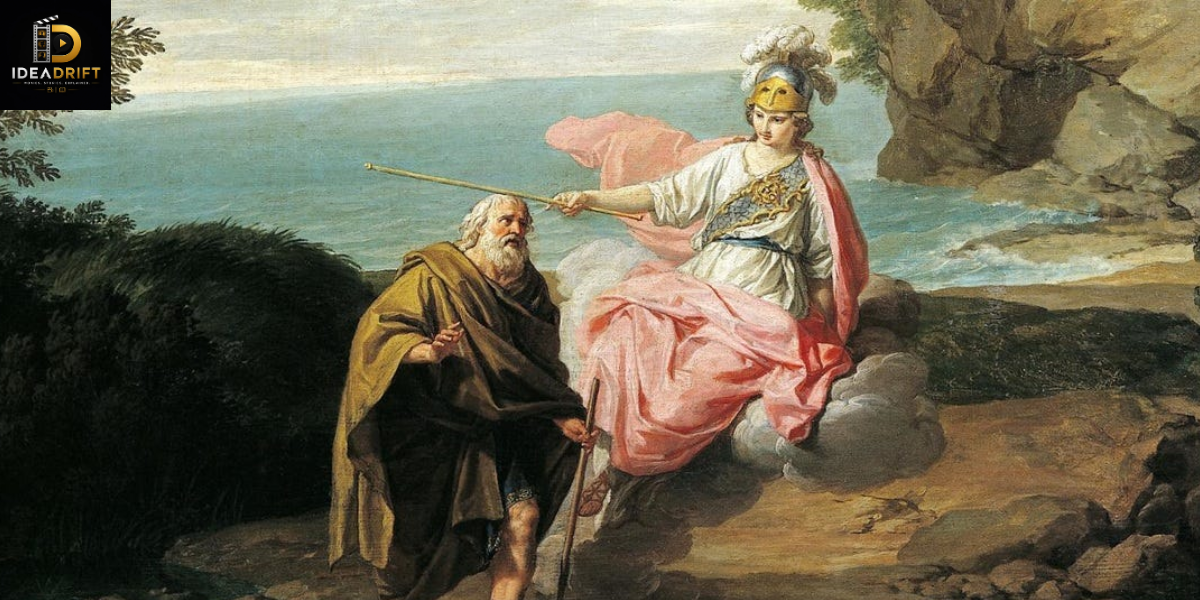
While Poseidon opposes Odysseus, Athena often supports him.
Athena is the Greek goddess associated with wisdom, strategy, and warfare. She recognizes Odysseus’ intelligence and becomes one of his strongest divine allies.
Her support is especially important when Odysseus finally returns to Ithaca.
Athena’s relationship with Odysseus highlights one of the story’s major themes: intelligence can be as powerful as physical strength.
The Sirens
The Sirens are among the most famous creatures in Greek mythology.
They are known for their beautiful and irresistible singing, which attracts sailors and leads them toward destruction.
Odysseus knows about the danger but wants to hear the Sirens’ song. To protect himself, he orders his crew to tie him to the ship’s mast.
He tells his men not to release him, regardless of what he says.
As the ship passes the Sirens, Odysseus hears their song and desperately wants to go toward them. His crew, however, follows his original instructions and keeps him tied to the mast.
The scene represents the struggle between desire and self-control.
Circe and the Enchanted Island
Another major encounter is with Circe, a powerful sorceress.
Circe transforms some of Odysseus’ men into animals. Odysseus confronts her and eventually gains her respect and assistance.
Instead of remaining simply an enemy, Circe becomes an important part of Odysseus’ journey.
She provides information that helps him understand the dangers ahead and continue his journey.
The Circe episode demonstrates how relationships in The Odyssey can change quickly. An apparent enemy can become an ally, while seemingly safe situations can become dangerous.
Calypso and the Longest Delay
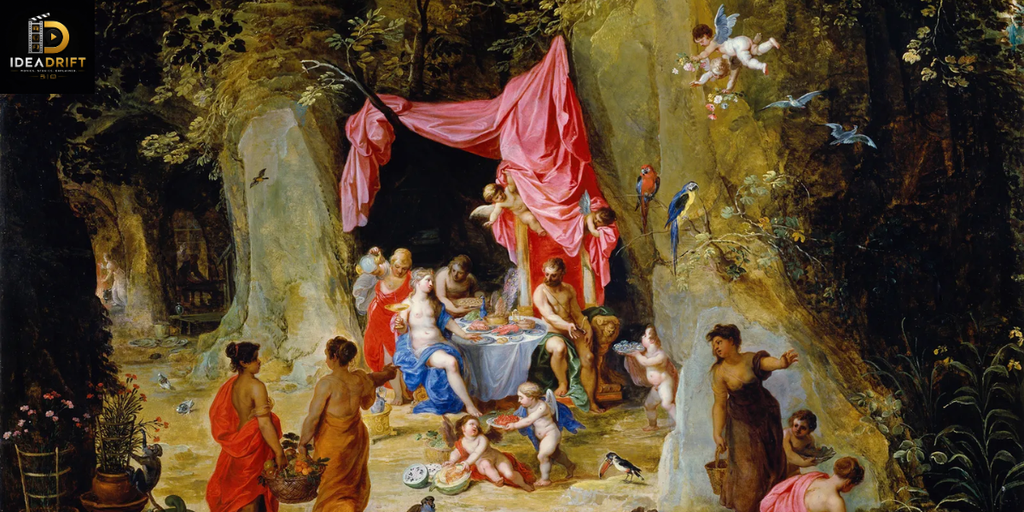
One of the most important emotional parts of the story involves Calypso.
After being shipwrecked, Odysseus reaches Calypso’s island. She keeps him there for years.
Calypso offers Odysseus comfort, safety, and even the possibility of immortality. Yet Odysseus continues to long for Ithaca.
This is important because it shows what Odysseus truly wants.
He does not simply want adventure or glory. He wants to return to his wife, his son, and his home.
His decision to leave Calypso demonstrates that home and family are more valuable to him than immortality.
Penelope: The Woman Waiting at Home
While Odysseus faces monsters and gods, Penelope faces her own challenges in Ithaca.
Many suitors want to marry Penelope because they believe Odysseus is dead. They begin occupying Odysseus’ palace and competing for her hand.
Penelope refuses to give up hope that her husband will return.
She is not simply a passive character waiting for Odysseus. She uses intelligence and strategy to delay the suitors.
One of her most famous strategies involves a weaving trick. She promises to choose a new husband after completing a piece of work, but secretly undoes the work each night.
Her intelligence mirrors Odysseus’ own cleverness.
Telemachus’ Journey
Odysseus’ son, Telemachus, also experiences an important transformation.
When the story begins, Telemachus is young and uncertain. His father has been gone for years, and the suitors have taken control of the household.
Telemachus eventually begins searching for information about his father.
His journey is not only about finding Odysseus. It is also about discovering his own identity.
He must grow from a boy into a man capable of protecting his family and reclaiming his father’s home.
The Journey Through Scylla and Charybdis
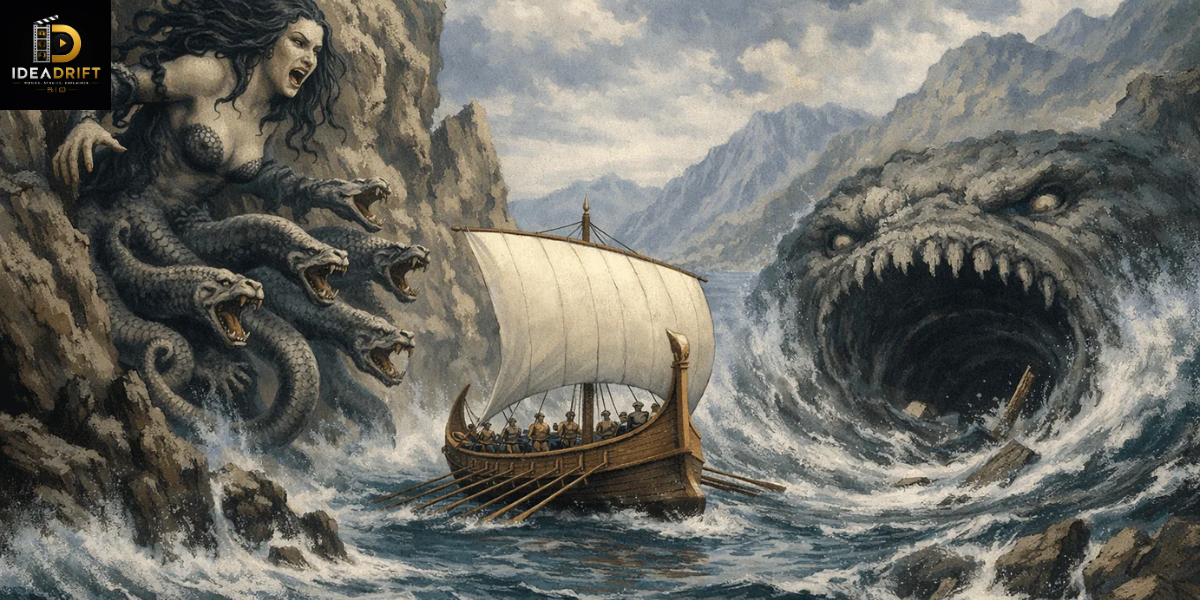
Odysseus eventually faces another terrifying challenge: Scylla and Charybdis.
Scylla is a dangerous sea monster, while Charybdis creates a deadly whirlpool.
Odysseus must navigate between these two threats, knowing that there may be no completely safe route.
This episode demonstrates another recurring theme of The Odyssey: sometimes heroes cannot avoid danger entirely. They must choose the path that gives them the best chance of survival.
Why Does Odysseus Take So Long to Return Home?
One of the most common questions about The Odyssey movie is why Odysseus’ journey lasts so many years.
The answer is a combination of divine punishment, bad luck, dangerous encounters, and Odysseus’ own decisions.
His conflict with Poseidon makes the journey extremely difficult. However, Odysseus also makes mistakes along the way.
His pride after defeating Polyphemus is particularly important. By revealing his identity, he gives Poseidon a reason to punish him.
The story therefore suggests that a hero’s greatest enemy is not always an external force. Sometimes, pride and poor judgment can create the biggest problems.
The Return to Ithaca
Eventually, Odysseus finally returns to Ithaca.
But he does not immediately reveal himself.
With Athena’s help, he disguises himself and secretly enters his own kingdom. He observes the situation and discovers who remains loyal to him.
The suitors have taken advantage of his absence, believing that he will never return.
Odysseus realizes that simply announcing his identity could put him in danger.
Instead, he carefully prepares his return.
The Famous Bow Challenge
One of the most important moments in the final part of the story involves Odysseus’ famous bow.
Penelope announces a challenge for the suitors. The man who can successfully use Odysseus’ bow will have the opportunity to marry her.
The suitors attempt the challenge but fail.
Then the disguised Odysseus takes the bow.
He successfully completes the challenge and reveals his true identity.
The final confrontation begins as Odysseus fights to reclaim his home.
The Odyssey Ending Explained
The ending of The Odyssey represents the completion of Odysseus’ long journey.
After years of separation, he reunites with his family and reclaims his kingdom.
However, the emotional meaning of the ending is more important than the physical victory.
Odysseus has spent years fighting monsters, surviving storms, resisting temptation, and dealing with the anger of the gods. Throughout everything, his ultimate goal has remained the same: to return home.
His return therefore represents more than a victory over the suitors. It represents the restoration of his identity, family, and place in the world.
Penelope’s recognition of Odysseus is particularly significant because she does not immediately accept him simply because he claims to be her husband. She tests him, ensuring that the man standing before her truly is Odysseus.
Their reunion becomes the emotional conclusion to the entire story.
Major Themes in The Odyssey
The Meaning of Home
Home is the most important destination in Odysseus’ journey.
Ithaca represents family, identity, belonging, and peace. Even when Odysseus is offered comfort and immortality, he continues to want to return home.
Loyalty
Penelope remains loyal to Odysseus despite years of uncertainty.
Telemachus also remains determined to discover what happened to his father.
Their loyalty demonstrates the strength of family relationships.
Pride and Consequences
Odysseus’ intelligence saves him many times, but his pride also causes problems.
His decision to reveal his identity to Polyphemus leads directly to Poseidon’s anger.
The story shows that even great heroes can be defeated by their own weaknesses.
Courage
Odysseus repeatedly faces situations that appear impossible.
His courage does not mean that he is never afraid. Instead, it means that he continues moving forward despite fear and uncertainty.
Fate and Free Will
The gods have enormous influence over Odysseus’ journey, but his choices still matter.
The story constantly asks how much of a person’s life is controlled by fate and how much is determined by personal decisions.
Important Characters in The Odyssey
Odysseus: The main hero and King of Ithaca, known for his intelligence, courage, and strategic thinking.
Penelope: Odysseus’ wife, who remains loyal to him and protects her household while he is away.
Telemachus: Odysseus’ son, who grows into a confident young man during his father’s absence.
Athena: The goddess of wisdom who supports Odysseus.
Poseidon: The god of the sea and one of Odysseus’ greatest enemies.
Polyphemus: A Cyclops and son of Poseidon who becomes involved in Odysseus’ long punishment.
Circe: A powerful sorceress who initially threatens Odysseus’ men but later helps him.
Calypso: A goddess who keeps Odysseus on her island for years.
Is The Odyssey a True Story?
The Odyssey is not generally considered a historical account. It is an ancient Greek epic traditionally attributed to the poet Homer.
The poem combines mythology, legendary heroes, monsters, gods, supernatural events, and human emotions.
Whether some elements were inspired by real places, historical conflicts, or ancient traditions remains a subject of scholarly discussion. However, the story itself belongs primarily to the world of Greek epic and mythology.
Why Is The Odyssey Still Popular?
The story has survived for thousands of years because its central ideas remain universal.
People still understand the desire to return home, protect family, overcome difficult circumstances, and discover who they really are.
Odysseus is also an unusually complex hero. He is intelligent and courageous, but he can also be proud, impulsive, and imperfect.
Those qualities make his journey feel more human.
The combination of Greek mythology, adventure, family drama, romance, action, and psychological conflict gives The Odyssey a timeless appeal.
Final Verdict
The Odyssey is much more than an ancient adventure story. It is a powerful tale about a man’s struggle to return to his family after years of war, danger, temptation, and loss.
Odysseus’ journey takes him across mysterious seas and into encounters with gods, monsters, sorceresses, and supernatural forces. Yet the most important part of his journey is not the battles he wins. It is his determination to return to Ithaca.
The story ultimately shows that true heroism is not only about strength or victory. It is also about endurance, loyalty, wisdom, and having the courage to keep moving toward home.
For viewers interested in The Odyssey movie explained, Greek mythology, epic adventures, and legendary heroes, the story offers layers of meaning that go far beyond its action and fantasy elements.
FAQ’s
What is The Odyssey movie about?
The Odyssey follows Odysseus as he attempts to return home to Ithaca after the Trojan War. His journey is filled with monsters, gods, dangerous seas, temptation, and unexpected challenges.
Who is the main character in The Odyssey?
The main character is Odysseus, the King of Ithaca and husband of Penelope. He is known for his intelligence, courage, and strategic thinking.
Why does Poseidon hate Odysseus?
Poseidon becomes Odysseus’ enemy after Odysseus blinds Polyphemus, the Cyclops and son of Poseidon. Odysseus later reveals his identity, allowing Polyphemus to ask his father for revenge.
Does Odysseus return home?
Yes. After many years of wandering and numerous dangerous encounters, Odysseus eventually returns to Ithaca and reunites with his family.
What is the main message of The Odyssey?
One of the central messages is that perseverance, loyalty, intelligence, and love of family can help people overcome even extraordinary challenges.
Is The Odyssey based on a true story?
The Odyssey is an ancient Greek epic traditionally attributed to Homer. It is considered mythology and epic literature rather than a verified historical account.
What happens to Penelope in The Odyssey?
Penelope remains loyal to Odysseus while he is away. She uses clever strategies to delay the suitors who want to marry her and eventually reunites with Odysseus after his return.
What happens at the end of The Odyssey?
Odysseus returns to Ithaca in disguise, reveals his identity, defeats the suitors, and is reunited with Penelope and Telemachus. His return completes his long journey home.